
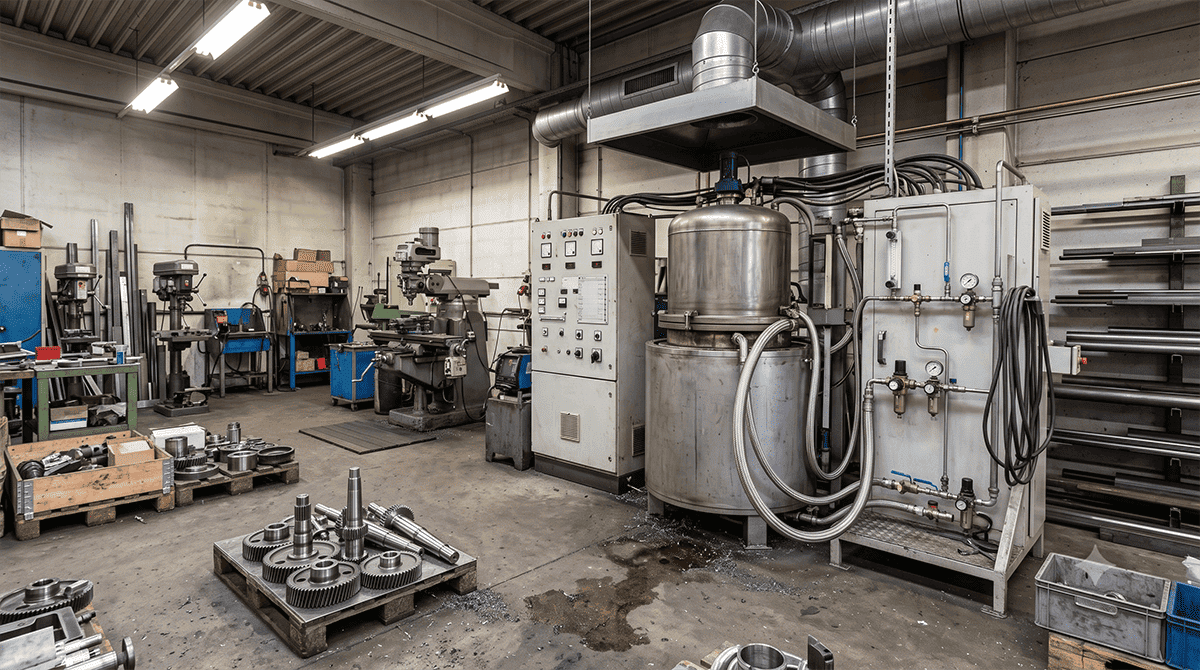
Carbonitriding is a combined thermochemical treatment in which carbon and nitrogen atoms are introduced simultaneously into the steel surface. This process is usually carried out at a lower temperature than carburizing, which can provide better control over distortion and energy consumption. After these elements diffuse into the surface, the part is typically quenched so that the surface layer attains high hardness. The simultaneous presence of carbon and nitrogen increases surface hardenability and improves the mechanical properties of the diffusion layer.
From an engineering perspective, carbonitriding is especially useful for small to medium-sized parts that require high surface hardness, good wear resistance, and suitable dimensional stability. This process can deliver desirable results in less time than some other methods. In addition, the nitrogen present in the surface layer can improve resistance to softening and reduce sensitivity to certain structural changes. Control of temperature, time, gas composition, and quench conditions plays a very important role in the final quality of this treatment.
Carbonitriding is widely used in the production of automotive components, industrial fasteners, screws, nuts, small gears, precision instrument parts, and components manufactured in high volumes. From an industrial standpoint, it is an economical and efficient option for increasing surface resistance. Overall, carbonitriding is a process that creates a desirable balance among speed, quality, surface hardness, and dimensional control.