
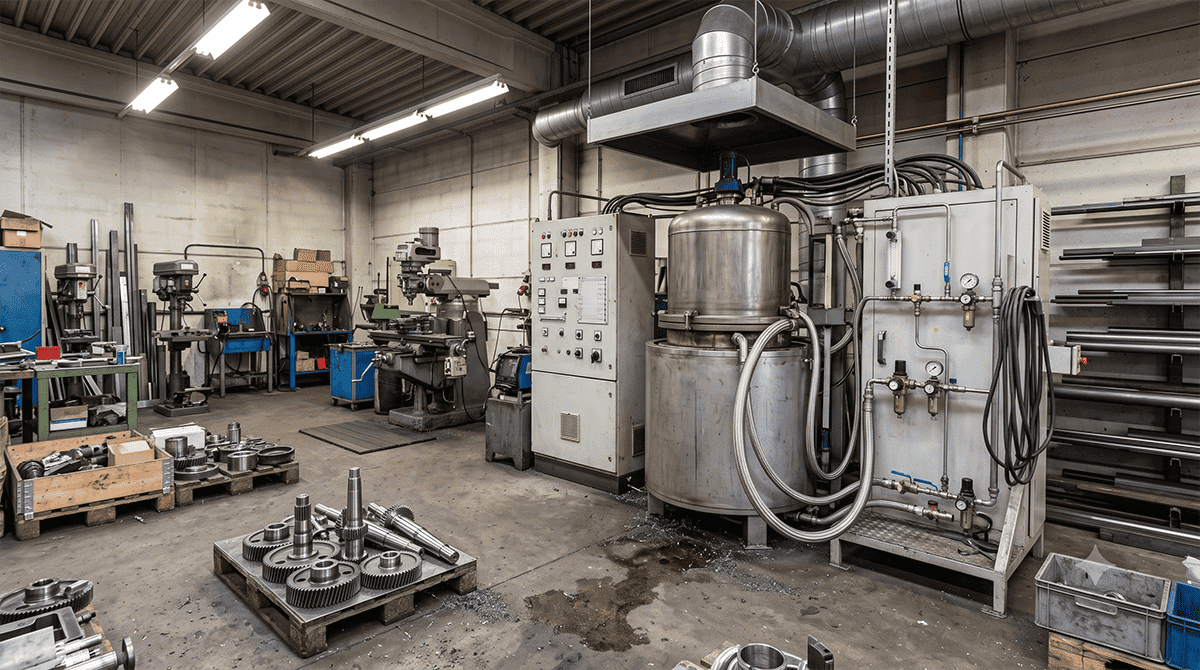
Nitriding is one of the most advanced thermochemical processes for surface hardening metals. In this method, nitrogen diffuses into the metal surface at a temperature relatively lower than many similar processes and forms hard nitride compounds with the alloying elements present in the material. This process is usually carried out without the need for a final quench, which is why it generally causes less distortion and dimensional change than some other methods.
From a metallurgical standpoint, nitriding produces a very hard surface layer and a subsurface diffusion zone, both of which contribute to improved service performance. This process not only increases surface hardness, but also enhances wear resistance, fatigue resistance, corrosion resistance, and the durability of the part under heavy operating conditions. Naturally, the final quality of nitriding depends on the steel chemistry, the presence of elements such as aluminum, chromium, and molybdenum, and precise control of temperature and time.
Nitriding is widely used in the manufacture of crankshafts, gears, dies, cylinders, industrial valves, tools, and precision machine components. One reason for the popularity of this method is that the part can be nitrided even after final machining, because thermal deformation is minimal. For this reason, nitriding is an excellent engineering choice for parts that require both high dimensional accuracy and high surface hardness.