
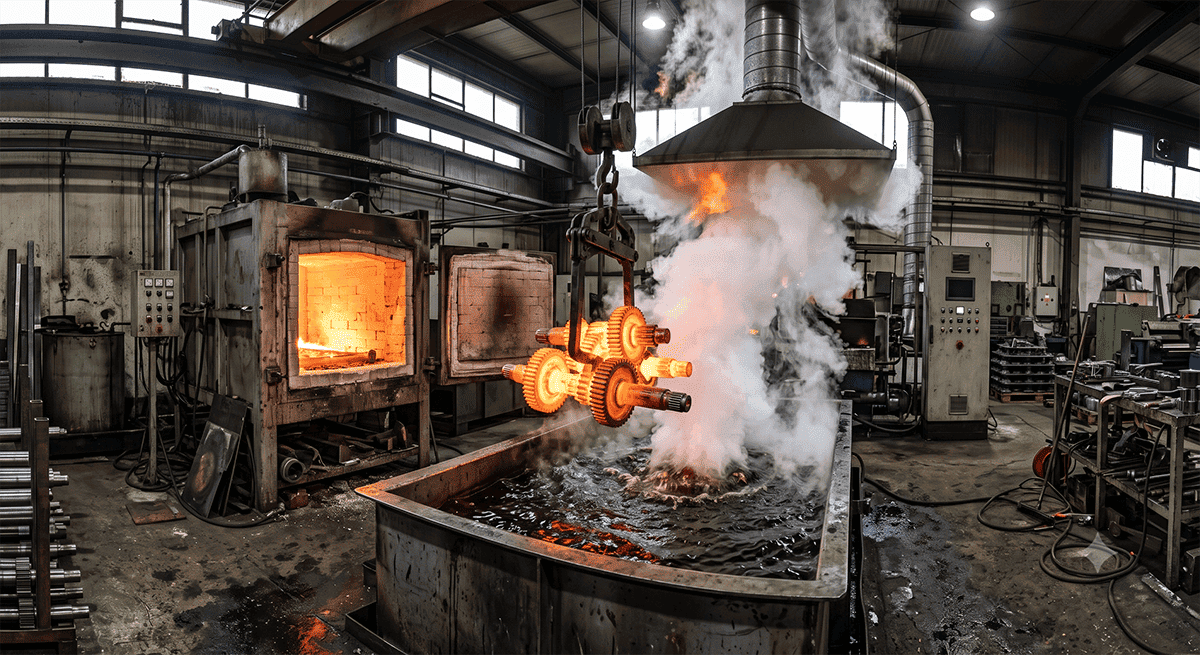
Quenching is one of the most important stages in many heat treatment processes and is usually performed after the part has been heated into the austenitic range. In this process, the hot part is rapidly cooled in a medium such as water, oil, polymer solutions, molten salt, or even controlled airflow. The purpose of this rapid cooling is to pass quickly through critical temperature ranges and prevent the formation of equilibrium phases such as pearlite and bainite so that harder structures, especially martensite, can form in the part.
Quench severity is one of the most decisive factors affecting the final properties of a component. If the cooling rate is too high, severe thermal stresses and internal temperature differences can cause cracking, warping, or distortion. On the other hand, if quenching is not fast enough, the desired hard structure will not form and the part will not reach its target properties. For this reason, the selection of quench medium must be made carefully. For example, water offers a high cooling rate but increases the risk of cracking, while oil is milder and is considered a better choice for many applications.
Across industries, quenching is used to produce components with high hardness, suitable wear resistance, and improved mechanical performance. However, this process is usually not the final step on its own, and it is commonly followed by tempering or stress relieving to reduce the negative effects of residual stress. Overall, quenching is one of the most important tools in thermal engineering for controlling the structure and properties of metals.