
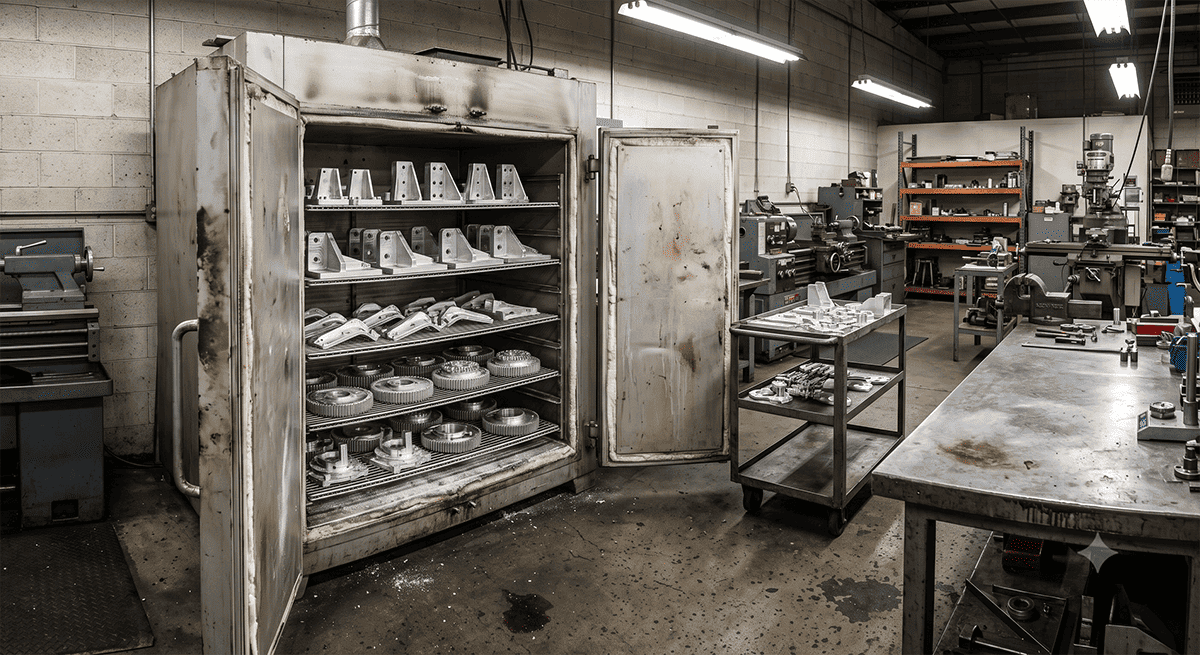
Age hardening, also known as precipitation hardening, is a highly important process in the metallurgy of non-ferrous alloys and certain specialty steels. This method works by forming very fine, dispersed precipitate particles within the metal matrix. These particles hinder dislocation movement and, as a result, increase the material's strength and hardness. Age hardening is commonly used in alloys such as aluminum, magnesium, copper, nickel, and in some stainless steels or maraging steels.
The age hardening process is often carried out in two or three stages. First, the alloy is heated to a specified temperature so that the alloying elements dissolve into the matrix; this stage is called solution treatment. The part is then rapidly cooled to create a supersaturated solid solution. In the next stage, the component is held for a defined period at room temperature or an elevated temperature so that fine precipitates gradually form. If the time or temperature exceeds the optimum level, the precipitates coarsen and the strengthening effect declines; this condition is known as overaging.
The importance of age hardening lies in its ability to deliver a high strength-to-weight ratio. For this reason, the process is highly valued in aerospace, automotive manufacturing, military equipment, lightweight engineering components, and advanced structural applications. Alloys treated by age hardening can remain lightweight while still achieving high mechanical strength. This advantage has made age hardening one of the key methods in the design and optimization of modern engineering materials.